
Forgiveness is often spoken about as a moral virtue — something noble, generous, even admirable. But it is also something far more practical and personal.
Forgiveness is a wellness practice.
It shapes how we carry pain, how much energy we have for living, and how free we feel in our own inner life. When forgiveness is misunderstood, it can feel heavy, unrealistic, or even unsafe. When it is understood clearly, it becomes a way of reclaiming peace, hope, and agency.
This is not a post about minimizing harm or rushing healing. It is about understanding forgiveness as an intentional act of care — especially when we have been deeply hurt.
What forgiveness is
At its core, forgiveness is the decision to release blame and move forward.
It is not about rewriting the past or pretending an injury didn’t occur. It is about choosing not to spend your present and future energy reliving what has already happened. Forgiveness redirects energy — away from resentment and toward healing.
When we hold grudges or carry unresolved anger, we remain emotionally tethered to the injury. Forgiveness loosens that grip. It allows us to move forward without being defined by what hurt us.
What forgiveness is not
Forgiveness is often misunderstood, which is why it can feel threatening.
Forgiveness is not:
- condoning abusive or harmful behavior
- excusing injustice
- forgetting what happened
- removing healthy boundaries
The phrase “forgive and forget” is rarely helpful — especially when harm has been real and lasting. Deep wounds often leave scars we carry for a lifetime. Forgiveness does not erase those scars. It allows us to live without constantly reopening them.
You can forgive and still remember.
You can forgive and still protect yourself.
You can forgive and still choose distance.
Do I need an apology in order to forgive?
This is one of the most difficult and important questions.
Forgiveness does not require the other person to apologize, understand, or take responsibility. Waiting for that moment can keep us trapped — replaying the injury, rehearsing what should have been said, hoping for closure that may never come.
Placing blame for the injustices in our lives often adds to our burden rather than relieving it. Each time we relive the offense, we re-experience the pain. Forgiveness interrupts that cycle.
We cannot control others’ behavior. We can choose how much control that behavior has over us.
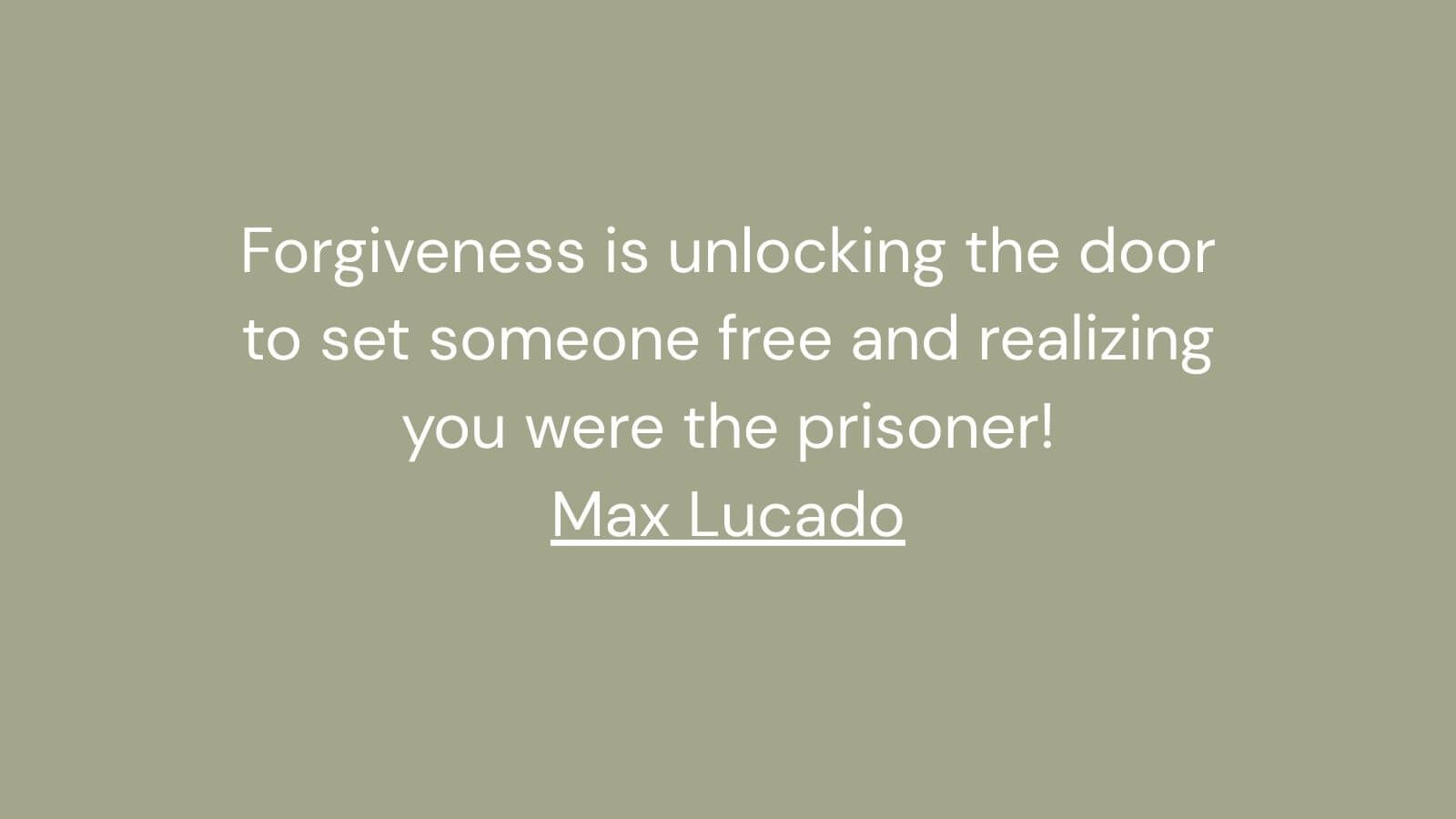
Forgiveness is not about righting the scales of justice. It is about freeing yourself from carrying the weight of retribution. Healing becomes possible when we stop requiring someone else’s transformation in order to begin our own.
Forgiveness and well-being
Forgiveness is not just emotionally meaningful — it is measurably beneficial.
Psychological research has consistently shown that forgiving others is linked to:
- better physical health
- increased optimism
- improved emotional well-being
- stronger relationships
A well-known study published in the Journal of Social and Clinical Psychology found that forgiveness is associated with lower stress, reduced anger, and greater overall well-being. Chronic resentment, on the other hand, has been linked to anxiety, depression, and even physical health challenges.
Pride, fear, bitterness, and resentment may feel protective, but over time, they narrow our emotional world. They block our ability to feel hope. Forgiveness opens that world again.
Forgiveness as a practice (not a moment)
Forgiveness is rarely a single decision. More often, it is a process — one that unfolds gradually and requires intention.
Here are practices that support forgiveness as part of intentional wellness.
1. Acknowledge what you are feeling
Forgiveness begins with honesty.
Name what hurts. Name what was lost. Name the anger, grief, disappointment, or betrayal. Avoiding these emotions doesn’t eliminate them — it buries them.
Acknowledgment is not indulgence. It is the foundation of healing.
2. Write it out
Journaling helps externalize pain so it doesn’t stay trapped inside.
Writing allows perspective to emerge — sometimes gently, sometimes unexpectedly. It can help you see patterns, name boundaries, and recognize growth.
You might explore questions like:
-
What specifically hurt the most about this experience?
-
What emotions surface when I think about it now?
-
What am I still holding onto?
-
What do I wish had been acknowledged or understood?
Gratitude can also coexist with grief. Look for ways this experience may have expanded your capacity to understand others’ pain or serve as a source of strength.
3. Allow yourself grace
Healing takes time.
Some days will feel lighter. Others may reopen old emotions. That doesn’t mean you’re failing — it means you’re human. Allow space for tears, movement, rest, and expression.
Celebrate small victories: a calmer reaction, a moment of peace, a lessened emotional charge. These are signs of progress.
4. Seek spiritual grounding (if this resonates)
For many, prayer offers a place to release what feels too heavy to carry alone.
Asking for divine help in softening your heart, guiding your healing, and showing you how to forgive does not require certainty — only willingness. Forgiveness often grows where surrender and trust meet.
5. Seek the good without denying the harm
This step is delicate and cannot be rushed.
Over time, ask:
- How has this experience shaped my empathy or understanding of others?
- What boundaries or wisdom has this taught me?
- How might this experience influence my future relationships in healthier ways?
- Where do I notice strength or clarity that wasn’t there before?
Seeking meaning does not minimize harm. It integrates it.
6. Learn to trust again — beginning with yourself
Forgiveness does not require blind trust.
It does require rebuilding trust in yourself — your judgment, your intuition, your ability to set boundaries. You can forgive and still choose wisely. You can forgive and still protect your peace.
Boundaries are not a failure of forgiveness; they are often its fruit.
7. Seek professional support when needed
Some wounds are too complex to carry alone.
Therapy or counseling can provide tools, language, and safety for processing deep pain. Seeking help is not weakness — it is wisdom.
A closing reflection
Forgiveness is not about the other person. It is about you.
It is choosing to place your wellness, health, and peace at the center of your life. It is reclaiming energy that has been tied up in resentment and returning it to living fully.
Forgiveness takes intention.
It takes courage.
And it takes time.
But in choosing forgiveness, you are choosing freedom — not from the past, but from its power to define your present.
That is not just healing.
It is wellness.